
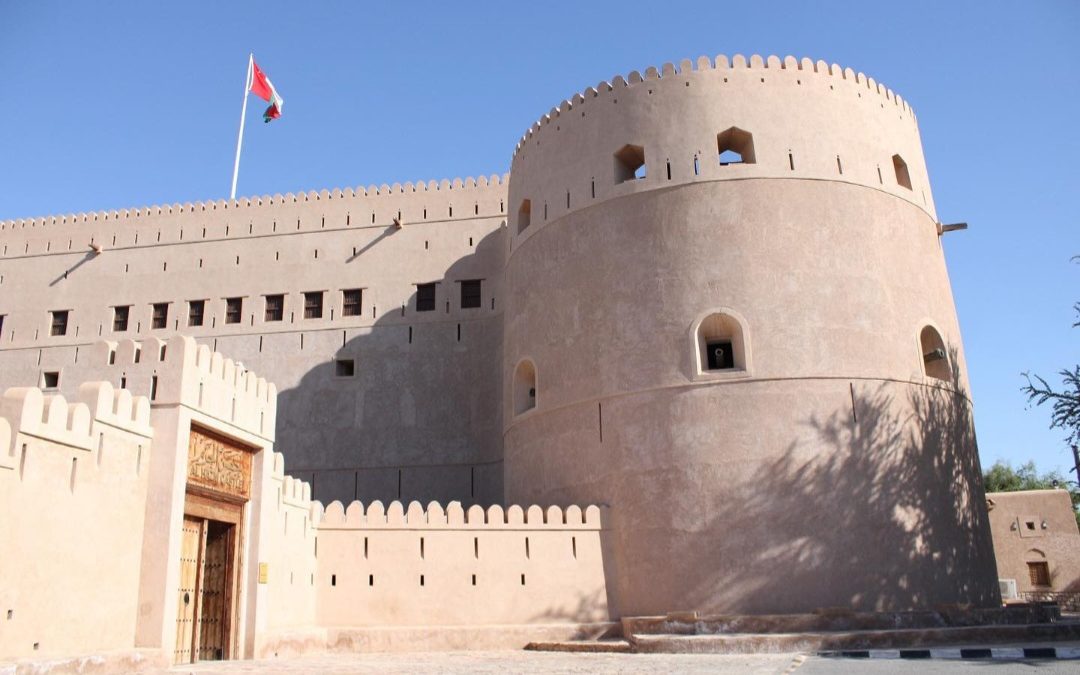
Oman today_ Al Hazm Castle, located in Rustaq in the South Al Batinah Governorate of Oman, is one of the country’s most remarkable examples of Islamic defensive architecture. It was built in 1708 under the orders of Imam Sultan bin Saeed II and later became his burial site. The castle features a rectangular design with two circular towers in the southeastern and southwestern corners, thick walls at least three meters wide, and entrances positioned so they do not face each other, reflecting its strategic and defensive importance at the time of construction. The roof is constructed without wooden beams, with its weight supported by columns, while the intricately crafted wooden doors and windows—imported from India—add a distinctive aesthetic touch.
The interior spaces include the Imam’s residence, a mosque, religious classrooms, and even a prison. A traditional falaj (irrigation channel) runs beneath the castle, supplying water to the surrounding date palm plantations. Beyond its defensive function, Al Hazm Castle exemplifies Islamic architectural artistry, Omani culture, and history. Today, it has undergone restoration and conservation as part of Oman’s cultural heritage. Visitors can experience a combination of solid architecture, fine wooden details, and scenic views of the surroundings, while temporary exhibitions and displays of geological heritage provide an educational and cultural dimension. Proper maintenance, careful restoration techniques, and protection of materials from direct sunlight have preserved the castle’s beauty and quality, making it one of Oman’s most captivating tourist destinations.