
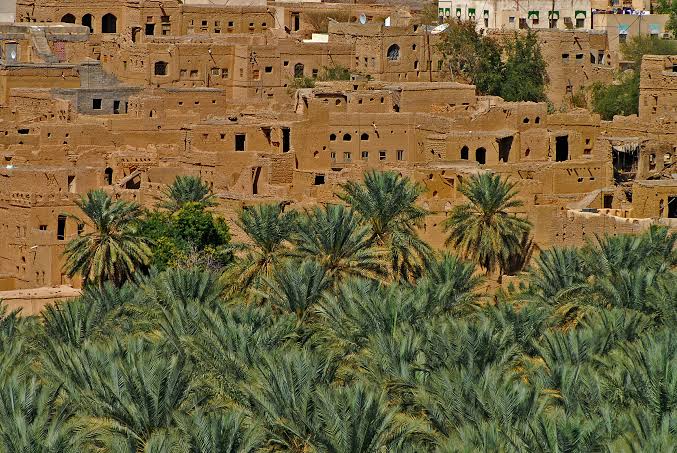
Oman today_ The historic village of Al Hamra is one of Oman’s lesser-known gems, located in the Ad Dakhiliyah Governorate, on the southern slopes of the majestic Hajar Mountains. With a history spanning over 400 years, the village stands as a remarkable example of traditional Omani architecture — featuring mud-brick houses with roofs made of palm branches and clay. Many of these ancient homes are still inhabited, preserving the calm rhythm of rural life in Oman. Its narrow stone-paved alleys, lush date plantations, and the traditional falaj irrigation system keep the spirit of authentic Omani culture and agriculture alive.
A visit to Al Hamra offers travelers an immersive journey through Oman’s history and heritage, especially when used as a central point to explore the surrounding attractions. Nearby sites include Jebel Shams, the highest peak in Oman; the fascinating Al Hoota Cave; and the picturesque stepped village of Misfat Al Abriyeen — each offering a breathtaking glimpse into the country’s natural beauty and ancient civilization.
Located about 200 kilometers from Muscat, Al Hamra can be reached by car in roughly 2.5 to 3 hours. The best time to visit is between October and April, when the weather is pleasantly mild and the mountain scenery, along with the date palm gardens, are at their most beautiful.
For those seeking a peaceful, cultural, and authentic experience away from Oman’s modern cities, Al Hamra remains an exceptional destination that beautifully bridges the past and present.