
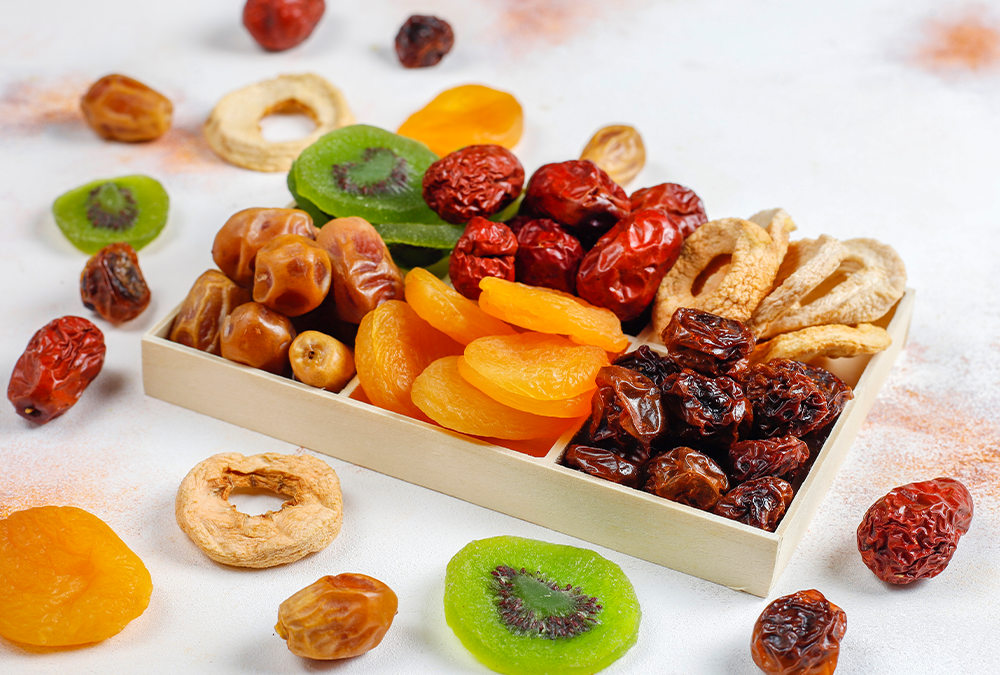
Oman today_ Nutritional Value: During the drying process, a large portion of the water content in fruits is removed, which leads to a higher concentration of nutrients. However, certain vitamins that are sensitive to heat and time, such as vitamin C, are reduced or may even be completely lost. On the other hand, dried fruits are a rich source of vitamins B1, B2, B6, pantothenic acid, and vitamin A. They are also packed with minerals such as calcium, iron, magnesium, phosphorus, potassium, sodium, copper, and manganese. Every 100 grams of dried fruit provides approximately 250 calories of energy and between 1 to 5 grams of protein. It is important to note that the drying method—whether traditional or industrial—can influence the final nutritional value of the product.
Drying Mechanism
The principle of drying foods is based on the evaporation of water. Reducing moisture prevents the growth and activity of spoilage-causing microorganisms, thereby extending the shelf life of the product. The drying rate is affected by several factors, including temperature, air dryness, airflow, atmospheric pressure, the exposed surface area of the fruit, and the structural properties of the fruit itself.
Stages of Dried Fruit Production
1. Selection of raw materials: Color, texture, flavor, ripeness, shape, and size are the main selection criteria. Suitable varieties must withstand the drying process and possess qualities such as color stability and an adequate level of soluble solids.
2. Washing: After removing foreign materials, fruits are washed with water that must meet drinking-water standards, with a hardness not exceeding 150 ppm.
3. Grading: Fruits are classified based on size, ripeness, color, and quality in order to improve the efficiency of subsequent operations.
4. Sorting: Unwanted or unsuitable elements are removed during this step.
5. Trimming and removal of stems and pits: This process can be done manually or mechanically, often using specialized stem-removal machines.
6. Peeling: Depending on the type of fruit, peeling may be carried out manually, mechanically, by steam, or using alkaline solutions.
7. Cutting: To speed up the drying process, fruits are sliced into pieces, sheets, or strips.
8. Enzyme inactivation: To prevent enzymatic browning and undesirable changes in color, flavor, or aroma, treatments such as heating, sulfurization, osmotic processing, or acid application are used.
9. Drying: This stage can be carried out by sun drying or industrial methods. Industrial drying, despite its higher initial costs, offers greater advantages such as improved product quality, larger-scale production in smaller spaces, and better retention of nutritional value. Industrial dryers include cabinet dryers, tunnel dryers, vacuum dryers, kiln dryers, freeze dryers, and others. The optimal final moisture content for dried fruit slices is between 18% and 25%.
After all stages are completed, the dried fruits are packaged and made available for the market.