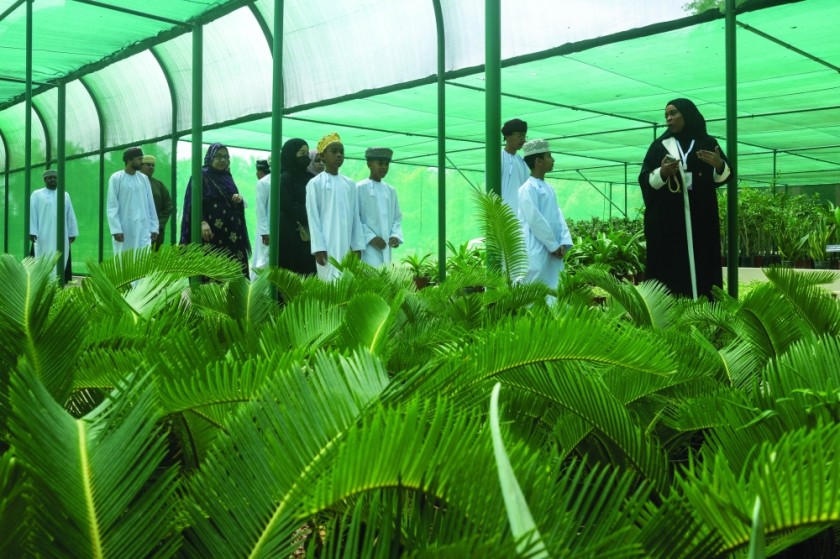
Oman today_ Razat Royal Farm in Salalah’s Dhofar Governorate has introduced a new tourist trail, offering visitors a fresh and engaging experience.
The trail is designed to acquaint visitors with the farm’s diverse agricultural landscapes and unique vegetation. Managed with precise scientific and technical standards, it has elevated the farm beyond its agricultural role, transforming it into an attractive tourism destination.
During their visit, tourists, accompanied by guides, pass through several stations, each dedicated to showcasing different crops and plants. The tour concludes at a comprehensive station that brings together all elements of the farm in one space, equipped with rest areas and visitor facilities.
Razat Farm cultivates a wide variety of crops. Several banana varieties—including the distinctive “Razat banana”—are grown here, supported by a specialized gene bank and a ripening unit. The farm is also home to coconut, papaya, grape, fig, custard apple, and Omani lemon trees. In addition, it produces a range of tropical and subtropical fruits as well as assorted vegetables.
Alongside these crops, the farm features native trees such as frankincense and fig, as well as ancient species including baobab, giant ficus, and tamarind. Medicinal and aromatic plants, such as turmeric, ginger, and basil, also form part of its agricultural diversity.
Beyond farming, Razat Royal Farm is recognized as a sanctuary for birds. It also preserves a historic agricultural jar dating back to the era of Sultan Said bin Taimour. Irrigation is sustained through the waters of Razat Spring, channeled via a combined network of traditional and modern aflaj systems.
The establishment of this tourist trail reflects a strong commitment to promoting agritourism and enhancing food security. The Royal Court Affairs has ensured that the initiative provides visitors with a rich and distinctive experience, while underscoring the role of agriculture as a foundation of sustainable development.
Situated along Sultan Qaboos Street in eastern Salalah, the farm covers more than 1,085 acres, of which around 900 acres are under cultivation. As one of the most significant establishments under the Royal Court Affairs, Razat Farm represents a remarkable integration of agricultural production with ecological diversity and historical heritage.
Inauguration of the Tourist Trail at Razat Royal Farm in Salalah