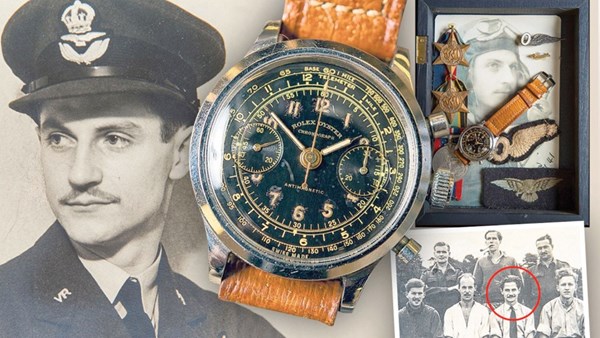
Oman today_ During World War II, many Allied soldiers who were captured by German and Japanese forces lost many of their valuable possessions, including their watches. However, in an unprecedented and humanitarian move, Rolex, under the management of Hans Wilsdorf, decided to send new Rolex watches to prisoners of war without requiring any pre-payment. This decision had a significant impact during the war, and one of the popular models of that time was the Rolex Oyster Perpetual 3525 chronograph, which many British and American prisoners were able to obtain through this initiative.
At the time, Rolex watches were considered a symbol of respect and power by German guards, and prisoners who wore these watches experienced better conditions. Many soldiers used their watches to establish positive interactions with the guards, and some even used them as tools to obtain essential help, such as maps or escape equipment. In some cases, possessing a Rolex led to the release of a prisoner from the camps.
Today, the Rolex watches that were used by prisoners in these camps are displayed in World War II museums due to their significant historical value.
How Rolex Watches Saved Prisoners of War?