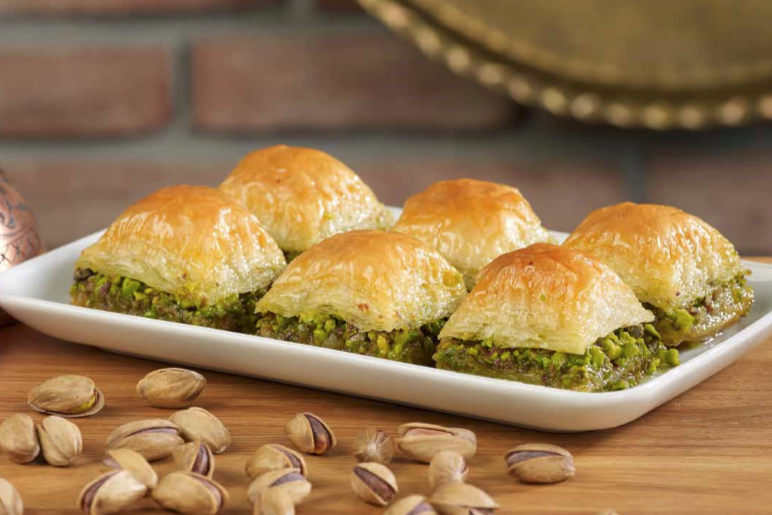
Oman today_ Baklava, one of the most beloved desserts in the Middle East and the Mediterranean, carries a sweet and intriguing history. Its origins trace back 2,500 years to the Assyrian Empire, where skilled hands layered thin sheets of dough with assorted nuts and drizzled them with honey to create a delicacy remarkably similar to the baklava we know today.
However, it was the Ottoman Empire that elevated baklava to its modern form. In the royal courts of the Ottomans, baklava became a culinary masterpiece, soon spreading across the Middle East, the Balkans, and the Mediterranean. Each region infused its own character into this dessert, from the flaky phyllo dough and syrupy sweetness of Turkey to Greece’s version sweetened with natural honey.
In Iran, baklava has its own unique identity. It comes in various shapes, such as diamond, square, or rolled, and offers flavors like pistachio, walnut, almond, and even coconut. Simple ingredients like rosewater, sugar, cardamom, and flour combine with Iranian craftsmanship to create a delicacy that captures the essence of local culture in every bite.
Baklava is more than just a dessert; it is a symbol of cultural exchange and historical interaction among nations. From Assyria to the Ottomans, from the Mediterranean to Iran, this cherished treat stands as a testament to the deep connections shared by civilizations over centuries.
The Sweet Secrets of Baklava’s History