
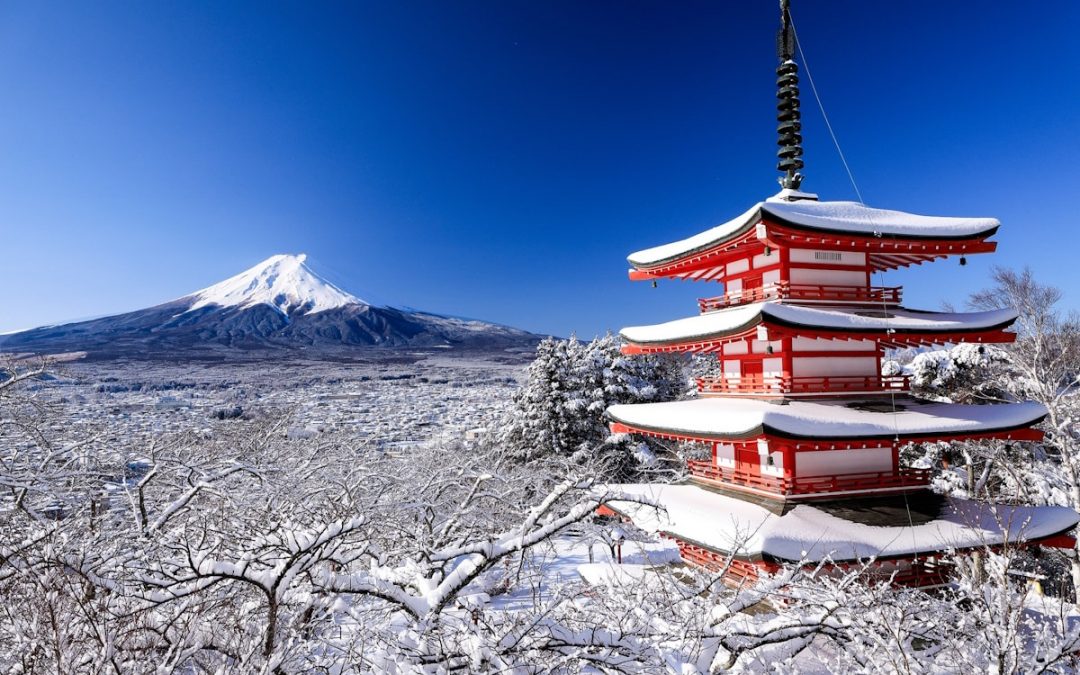
Before setting out to climb Japan’s most famous peak, it never hurts to pay your respects to the gods of the mountain. These are, after all, the deities locals believe can position a rock on Mount Fuji so that it twists an unwary hiker’s ankle or form a ring of cloud around the peak so dense that the track and your climbing partners simply disappear.
There are four routes to the top of the slumbering 3,776-metre volcano, a Unesco World Heritage Site since 2013, that is as quintessentially Japanese as geishas and cherry blossoms.
I would suggest taking the Yoshida Trail, which traditionally starts at the Kitaguchi Hongu Fuji Sengen Shrine. Set amid towering cedar trees, the shrine is one of about 1,300 Asama shrines that are rooted in the worship of volcanoes in general, but Mount Fuji, in particular. Asama shrines are dedicated to Konohanasakuya-hima, or the “cherry blossom princess”, the goddess of all volcanic peaks in Japanese mythology.
A much smaller version of the shrine is said to have been founded around the year 100, and dedicated to the goddess in 788 in an effort to placate the angry spirits of the mountain and reduce the frequent eruptions and devastating lava flows. The imposing main hall dates from 1615 and faces an elevated stage where traditional music is performed on festival days.
Thick shimenawa ropes of rice straw encircle the tallest trees in the compound, festooned with paper streamers.
To pray for safety on the coming journey, approach the shrine and tug hard on the rope to ring the bell, which is meant to ensure the gods are listening. Throw a few coins in the offering box, clap your hands, bow your head and ask for the gods’ protection. You are now ready to set out.
The shrine used to be the starting point of the Yoshida Trail, but a road has been constructed for buses heading to the Fuji-Subaru Line Fifth Station, at an altitude of 2,305 metres.
It is here that the Yamanashi prefectural government is expected to start collecting tolls from this summer, with the sum of 2,000 Japanese yen ($13.41) expected to be agreed in the coming weeks as the appropriate figure. The money raised will go to improving the path to the top of the mountain, renovating public toilets and the construction of emergency shelters for use in the event of an eruption.
The local government is also planning to impose a limit of 4,000 hikers a day on the route in an effort to reduce congestion during the 70-day climbing season, which traditionally starts on July 1.