
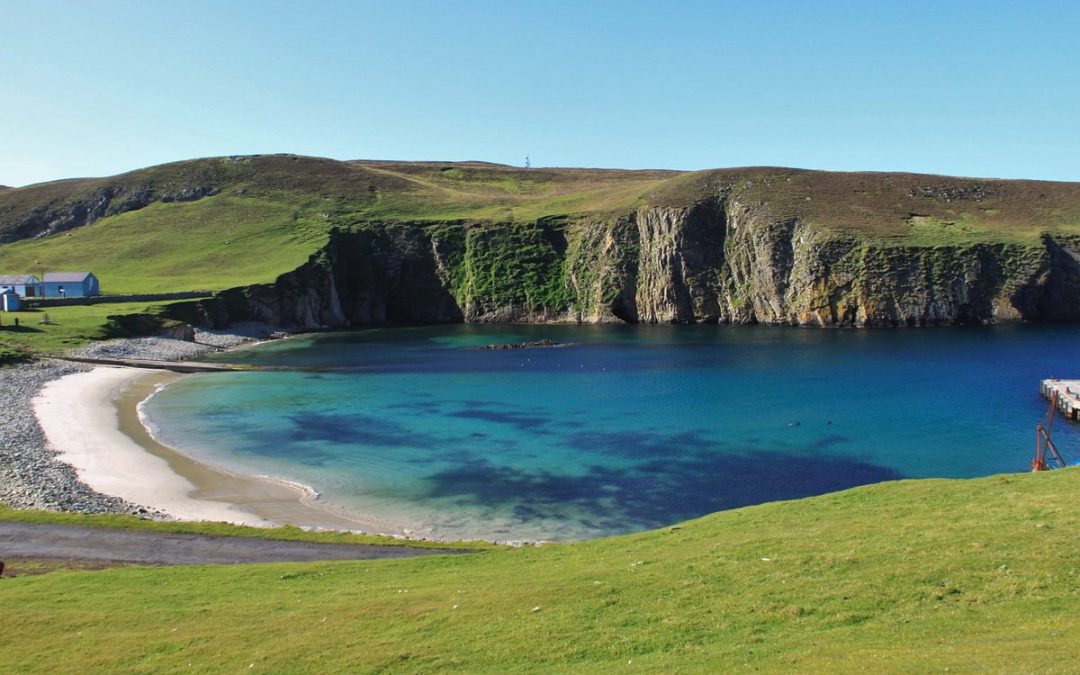
The guidebooks will tell you the best time to visit Scotland’s Fair Isle is summer, when the golden beams of “da simmer dim” – which means “the twilight of a Shetland summer evening” – ensure more than 19 hours of sunlight.
But winter is a time unlike any other at Fair Isle, the most geographically remote inhabited island in the UK.
It’s when Mother Nature unleashes her blistering, raw power: tumultuous winds, crashing waves and stinging breezes. There are also barely six hours of light a day.
Named Fridarey, the “island of peace”, by Norse settlers, this tiny island – barely 5km long and 2.4km wide – is half-way between Orkney and Shetland.
Now owned by the National Trust for Scotland, it is famed for its birdlife, knitwear and historic shipwrecks.
I watch the stunning sunset show as deep violets coalesce with warm oranges, and golden yellows blend into light pinks.
My genial host tells me that I could catch a glimpse of the stunning aurora borealis, locally called “mirrie dancers” (mirrie translates into blur), if I am lucky.
I gaze hard into the big, clear skies, but the shimmering dancers fail to show up.
The Force 5 wind, however, is strong and can be accompanied by powerful rain and gales. It feels even fiercer as trees are few and far between.
Shetland folklore says the stormy periods are caused by a battle between two gods, Da Sea Midder and Teran, vying to dominate the seasons.
For centuries, until the discovery of oil, the people of Fair Isle made a living from fishing and crofting. Life on the island, home to barely 50 people now, is far from easy, even in today’s connected times.
Getting there is an adventure. One can travel by sea or air (booking is essential), but disruptions can occur in any season because of high winds, fog and other weather disturbances.
Those landscapes and seascapes are so wild and dramatic, however, it makes islanders content with the one shop, one school and one community hall to which they have access.
Marie Bruhat, a textile artist and knitwear designer, first visited Fair Isle in 2015 and was bowled over by its beauty.
Originally from Auvergne in France, she made the island her home in 2017. “You don’t have a job, you aren’t one thing, you’re an ‘islander’,” she says.
“What is important when living in a place like Fair Isle is flexibility,” Bruhat says. “You learn to make the most of the weather, and it’s important to be able to adapt to anything that happens.”
The islanders, challenged by the elements each day, tend to be inventive, resourceful and rely on each other.
No two days are the same as the sun and the sea create ever-changing vistas.
This is also one of the best places in Europe for birdlife sightings. Many rare birds stop off on their migration routes in spring and autumn, while varied species of seabirds nest in the cliffs every summer.
At least 350 unique species have been identified in the area until now, with reported sightings of rare birds such as the brown-headed cowbird, red-rumped swallow and white-tailed eagle.
The black-and-white puffins can always be relied on to provide a show, but it can be tougher to spot the Arctic tern, black guillemot and northern gannet.
On my visit, I enjoy otter watching. The playful creatures gambol excitedly as they try to get in their fill of the short daylight hours.
From April to August, the cliffs are packed with seabirds such as razorbills, storm petrels, northern fulmars, kittiwakes and guillemots.
There’s plenty more to do than simply bird watch here, however. The dramatic cliffs and changing shorelines also offer plenty of opportunities to walk, cycle, sail, angle, kayak, dive, surf and climb.
Then there’s the George Waterston Memorial Centre and Museum, named after the man who bought the island after the Second World War, where visitors learn about the history of the island, the many shipwrecks off its coast and its acclaimed knitwear.