
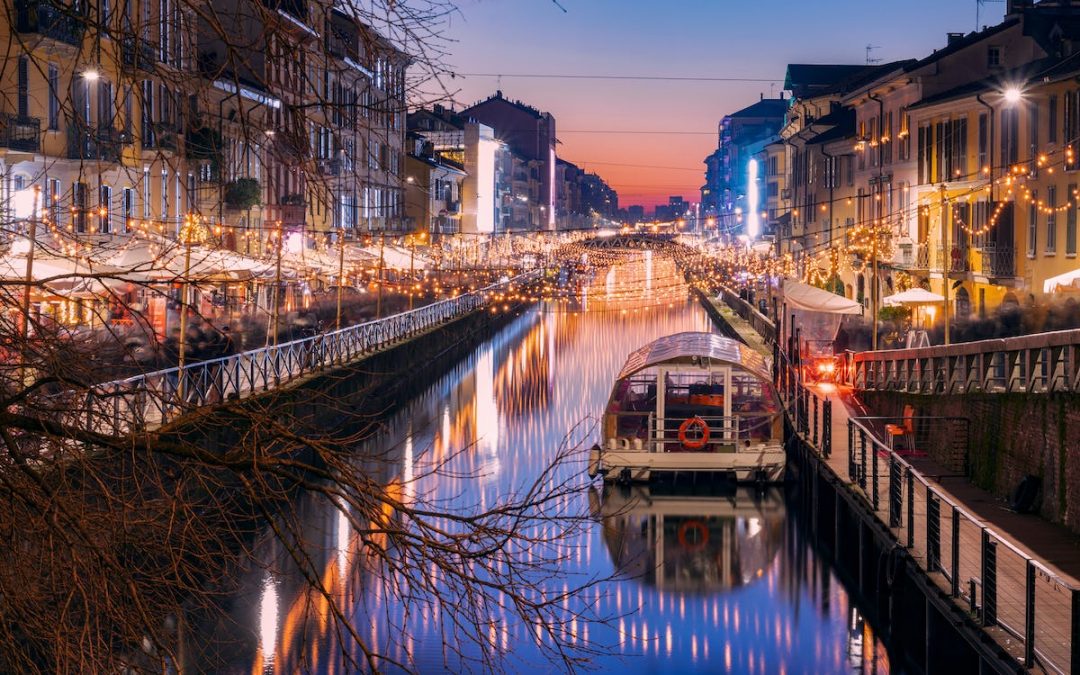
It is always tempting to time a trip to Milan when there is a glamorous event going on. Friends from Italy tell me to plan for Design Week and Salone del Mobile in April, Fashion Week in September or a celebrity gala concert at La Scala. But I am here in decidedly unfashionable, off-season winter, to avoid the crowds and discover an alternative Milano.
I won’t be joining the long queues to see the Duomo, nor booking months in advance online to squeeze in a visit to Leonardo da Vinci’s Last Supper.
My first big surprise comes straight away as I arrive at the imposing Milano Centrale train station, for years an edgy no-go zone. Today, goods warehouses behind the train lines have been transformed into the funky Mercato Centrale, a dazzling marketplace of street-food stalls where you can feast on artisanal pizza and panini, handmade pasta smothered with aromatic white truffles and even take a swift cooking course. All that before even checking into the hotel.
To check out Milan’s lesser-known creative scene, I head out of the historic centre, only a quick hop on the Metro to the former working-class Isola neighbourhood. Fabricca del Vapore is a sprawling cultural hub housed in a redbrick industrial complex that once manufactured trains and trams. Now, the venue hosts theatre and music performances, experimental cinema, exhibitions and creative laboratories.
Next door, the grandly named Tempio del Futuro Perduto is actually an abandoned transport depot recently recognised as an independent avant-garde collective for emerging young artists committed to eco-sustainable activities.
Isola’s third hub is a former electric generator, converted in 2021 into the ADI Design Museum to showcase the best of Made in Italy. It exhibits everything from Marzocco espresso machines to a vintage red Ferrari.
I notice that every street running off ADI is lined with bustling Asian supermarkets, boutiques and restaurants, forming Milan’s vibrant Chinatown. Via Paolo Sarpi is a gold mine of street-food locales that make me think I’m in Hong Kong, serving everything from wonton noodles to dim sum and beef dumplings. There’s even a venerable Italian butcher’s shop, la Macelleria Sirtori, that still sells meat but has a Chinese chef cooking up a storm for diners sitting at a communal table in the old cold room.
Milan’s other cool, under-the-radar neighbourhood is Porta Venezia, the buzzing multi-ethnic quarter around one of the arched city gates. Just before arriving at the ancient Porta, any visitor with a family should stop at the Museo di Storia Naturale.
From the outside, this ornate neo-Gothic palazzo immediately reminds me of London’s landmark Natural History Museum. While its dinosaur collection may pale in comparison, I’m enchanted by a whole floor devoted to exotic taxidermy tableaux filled with lifelike stuffed animals that mirror the extravagant jungle paintings of Le Douanier Rousseau.
Meanwhile, Porta Venezia has long been a home for Ethiopian and Eritrean immigrants settling in Milan, and friendly, affordable African eateries such as Adulis and Warsa have been here for more than 30 years, serving their signature zigni dish, spicy meat and vegetables communally eaten on injera flatbread.
Here, I also stumble upon the dazzling emporium of Italian designer Lisa Corti. She was raised and influenced in colonial Eritrea, a different world from the exclusive designs of Milan’s haute-couture Fashion District, but her bold multicoloured textiles are equally irresistible.
Chef Diego Rossi, whose Trippa trattoria in the gentrified Porta Romana neighbourhood is one the hottest tables in town, describes Milan’s dining scene as “curious”. “Everyone can survive here, from fine dining to street food, as long as you are sufficiently creative, ever-changing, to keep your diners interested,” he tells me. “So there is room for the three-star Michelin fine-dining restaurant to the old traditional trattoria or today’s latest taste-of-the-day, revisited pizza.”
Rossi’s cuisine certainly enchants foodies who flock to Trippa’s cool dining room every night. The menu is always changing, with dishes veering from adventurous offal – duck gizzard or sweetbreads – to seasonal vegetarian recipes, pairing roasted pumpkin with melted Pannerone di Lodi cheese or grilled cabbage and char salad smothered with creamy pear sauce.
Most recently, one of Italy’s most celebrated chefs, Gennaro Esposito, arrived in Milan from his native south to open the Nuovo Caruso Bistro right in the heart of the Fashion District. He created it to be “somewhere democratic, accessible for locals and tourists alike”, he tells me.
Esposito’s exceptional dishes use the finest ingredients, especially the signature Gran Tour della Verdura: celeriac with olives and fennel, raw vegetables dip, beetroot carpaccio, a creamy lentil soup. “I don’t think the Milanese eat enough vegetables so I will try to change that,” he says with a smile.