
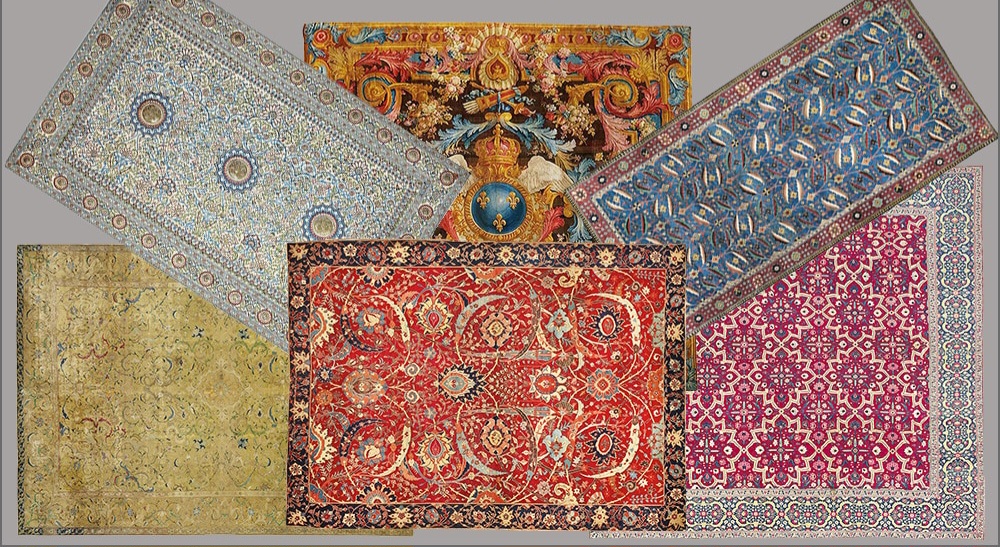
Oman today_ The renowned “Clark Sickle-Leaf” carpet still holds the title of the world’s most expensive rug more than a decade after its historic sale. This masterpiece, which shook the carpet market in 2013, is now housed in one of the most prominent art collections in the Middle East.
On June 5, 2013, the carpet was sold at Sotheby’s New York auction for $33,765,000—nearly five times the initial expert estimates of $5–7 million. The sale resulted from an intense ten-minute competition between in-person and telephone bidders, ultimately won by an anonymous telephone buyer.
Artistically, the “Sickle-Leaf” carpet is one of the rarest examples of Kerman weaving from the Safavid period. Its design, unlike the typical symmetrical patterns, is dynamic and full of movement: long, curved, sickle-shaped leaves flow across the field with a fluid and graceful rhythm. The structure and weaving of the carpet clearly reflect the peak craftsmanship of Kerman weavers of that era.
The value of this carpet goes beyond its beauty and technique; its ownership history adds significant importance. It was originally purchased in the early 20th century in Paris by William E. Clark, a U.S. senator and wealthy industrialist. After his death in 1925, the carpet, along with other pieces from his collection, was donated to the Corcoran Gallery of Art in Washington, D.C., where it remained for decades.
In 2013, due to financial difficulties, the collection decided to auction off some of its most valuable works, including this carpet. Years later, the identity of the anonymous buyer was revealed, and today the carpet is housed in the Museum of Islamic Art in Doha.
Before the sale of the “Sickle-Leaf” carpet, the record for the world’s most expensive rug was held by the Kerman Vase Carpet, valued at $9.6 million.