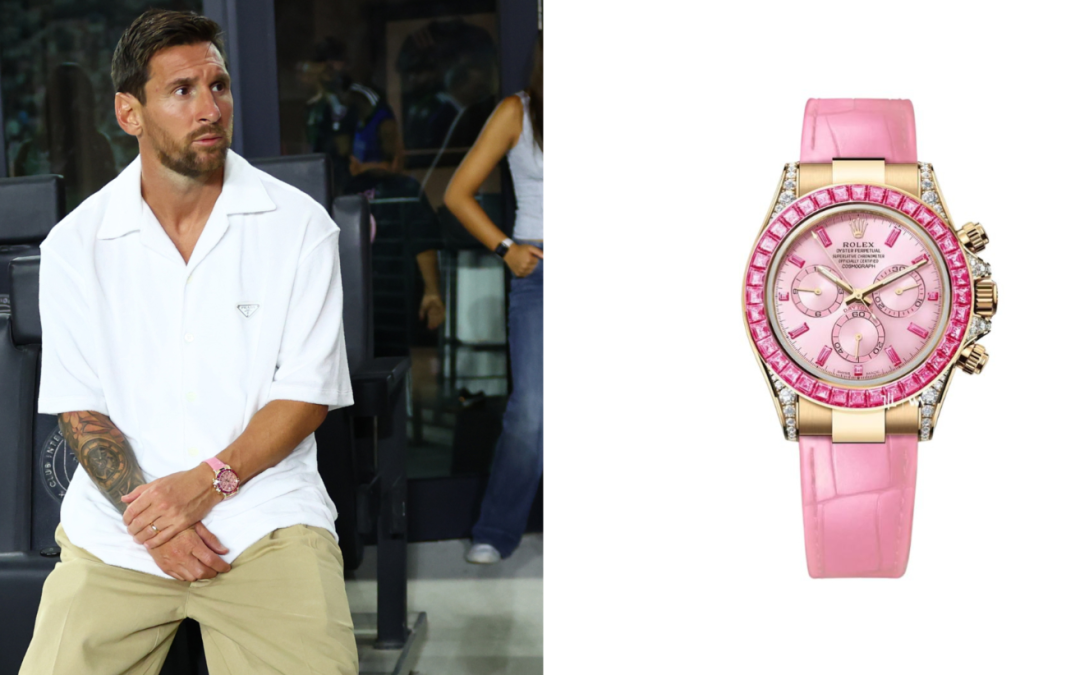
Oman today_ Lionel Messi, the 38-year-old global football icon, attended a recent Inter Miami match from the stands due to a suspension that kept him off the field. However, what drew the attention of media outlets and social media users was not his absence from the game, but rather his bold fashion choice.
Messi was seen wearing an exceptionally rare Rolex watch — the Rolex Daytona “Barbie” model. This timepiece is not listed in Rolex’s public catalog and is believed to have been produced in only about ten units worldwide. Made from 18-carat gold, adorned with rare pink sapphires, and paired with a leather strap, it stands out as a unique luxury item rarely seen in sportswear. The estimated value of this exclusive watch ranges between $800,000 and $2 million, with most sources agreeing on a figure close to $900,000. Due to its rarity, it is typically traded privately and discreetly among elite collectors rather than being sold through official retailers.
Yet, the story goes beyond the luxury watch itself. Choosing the color pink — particularly in the traditionally masculine and conservative world of football — is anything but a neutral decision. Messi has been spotted wearing pink items in the past as well, from training clothes and casual jackets to pink athletic shoes. Now, by wearing a watch nicknamed “Barbie” because of its distinctive color, he once again symbolically challenges traditional gender norms and color stereotypes.
In a world where pink is still viewed in some cultures as a color exclusively associated with femininity, such fashion choices by one of the most prominent figures in men’s sports carry an implicit cultural and social message. Whether intentional or not, Messi’s choices contribute — consciously or subconsciously — to broadening the acceptance of personal style diversity and breaking down gendered expectations.
Interestingly, in 2023, Messi’s pink No. 10 Inter Miami jersey was also named one of the 15 best-selling fashion items of the year by Vogue magazine — a clear indication of the public’s embrace of a color once confined to rigid traditional views of masculinity.
The rare and luxurious Rolex watch featured in Lionel Messi’s recent look has made headlines