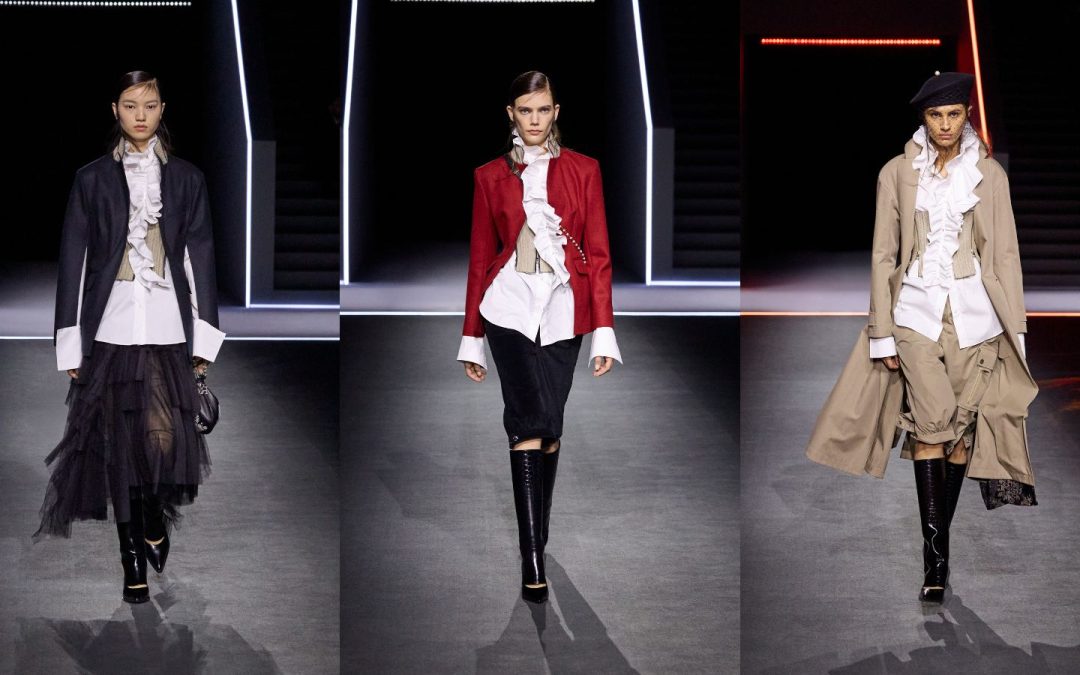
Oman today_ Maria Grazia Chiuri, the creative director of Dior, has presented a remarkable Fall/Winter 2025 collection that offers a fresh perspective on the brand’s legacy and cultural identities. This collection emphasizes the concept of clothing as a medium to express identity, history, and personal freedom. The show began with a unique stage setting where a model sat on a swing adorned with the phrase “Once Upon a Time,” surrounded by cinematic visuals of fire, ice, and meteor showers. These natural elements contrasted with the designs, which focused on individuality and self-expression. A key feature of the collection was the white shirt, which was paired with designs by Gianfranco Ferré, the former architect and creative director of Dior. This shirt not only broke gender norms through its design but also added a fresh identity to the collection.
Virginia Woolf’s novel Orlando, a story that chronicles a character’s transformation across centuries, served as a major inspiration for this collection. Chiuri’s fascination with the evolution of fashion over time resonated deeply with the themes of the novel. Ruffled collars and sporty corsets featured prominently throughout the collection, symbolizing a fusion of historical and modern aesthetics. By combining classic items like the tailcoat with contemporary elements like intricate embroidery, the collection blurred the boundaries between tradition and innovation. Additionally, the theatrical staging by renowned director Robert Wilson, with shifting colors from dark to light, infused the show with a dramatic and dynamic energy. The event was further elevated by the presence of notable guests such as Natalie Portman, Jisoo from BLACKPINK, and Ling Ling, making it one of the standout moments in the fashion calendar.
The Dior Fall/Winter 2025 collection reminds us that fashion is more than design; it is a tool for expressing identity, redefining history, and envisioning a bold future. The daring combination of black and white tones, functional yet luxurious designs, and a strong emphasis on feminist themes make this collection one of Chiuri’s most distinguished works.
Maria Grazia Chiuri and the Fusion of Tradition and Innovation at Dior