
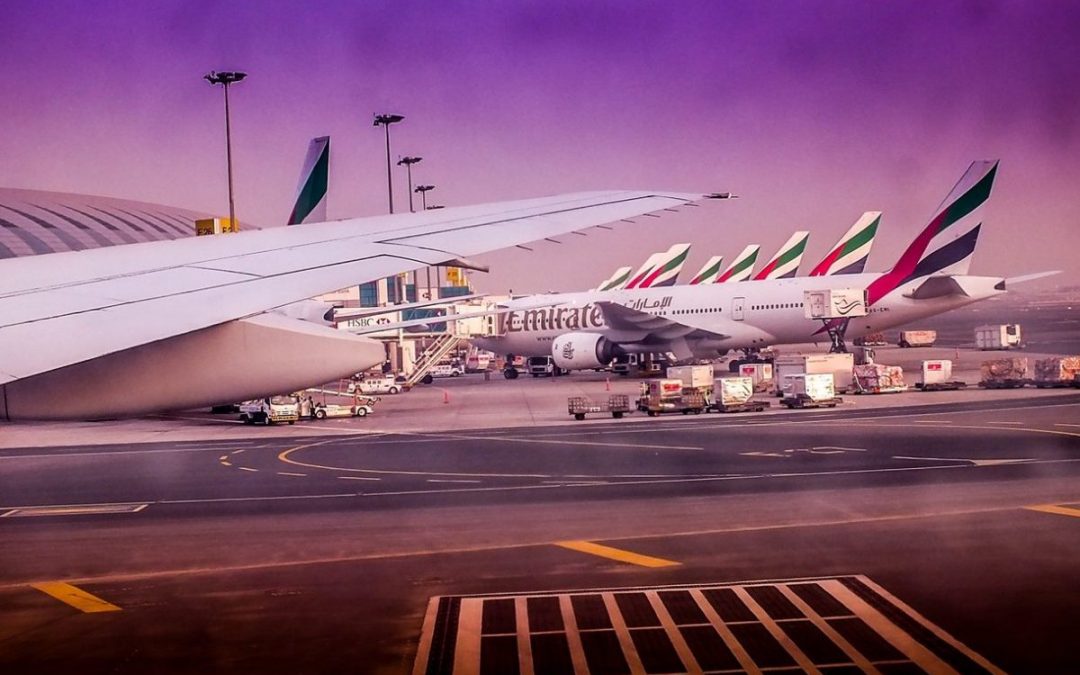
Dubai International Airport expects its annual passenger traffic to exceed pre-pandemic levels in 2023 with a new forecast of 86.8 million travellers, driven by strong growth in the first three quarters of the year.
State-run operator Dubai Airports on Wednesday revised its forecast upwards from an earlier projection in August of 85 million passengers.
The world’s busiest hub by international traffic recorded 86.4 million travellers in 2019.
“DXB is all set to surpass the pre-pandemic milestone well ahead of our initial projections by almost a year. Our outlook for the remainder of this year and the next remains optimistic,” said Paul Griffiths, chief executive of Dubai Airports.
The emirate is expected to host a flurry of global events that are expected to attract an influx of international visitors to the city.
These include the Dubai Airshow that started on November 13, the International Civil Aviation Organisation’s Conference on Aviation and Alternative Fuels on November 20, and the Cop28 UN climate summit at the end of the month.
Chinese travellers are also starting to come back to Dubai, although not yet in full force, Mr Griffiths said earlier this month.
DXB recorded 22.9 million passengers in the third quarter of this year – the highest quarterly traffic since 2019, Dubai Airports said on Wednesday.
This takes the total year-to-date traffic for the first nine months of the year to 64.5 million passengers, up 39.3 per cent compared to the same period in 2022 and 1 per cent above 2019.
“Dubai Airports is expecting record-breaking numbers to continue in Q4 and 2024,” it said.
With 8.9 million passengers in the first nine months of the year, India remained DXB’s top country destination in terms of traffic volume, followed by Saudi Arabia with 4.8 million passengers, and the UK with 4.4 million passengers.
Other country destinations include Pakistan with 3.1 million passengers, the US (2.7 million) and Russia (1.8 million).
The top cities by traffic were London (2.7 million passengers) and Riyadh (1.9 million), closely followed by Mumbai (1.8 million) and Jeddah (1.7 million passengers).
To accommodate growth at DXB, Dubai Airports is undertaking a project to expand infrastructure capacity and improve operational efficiency.
With a current capacity of 100 million passengers annually at DXB, the use of new technology, expansion and refurbishment of existing infrastructure and more efficient use of space is expected to propel the airport’s capacity to 120 million, it said.
Air cargo gained momentum in the third quarter, registering a surge of 12.3 per cent year on year, to reach 446,400 tonnes, according to the statement.
“The strong performance this year has helped level out a double-digit contraction in cargo recorded at the end of last year,” Dubai Airports said.
The hub recorded 1.3 million tonnes of cargo in the first nine months of the year, declining less than 1 per cent year on year.